

LANGUAGE
When is the best age to teach children penmanship?
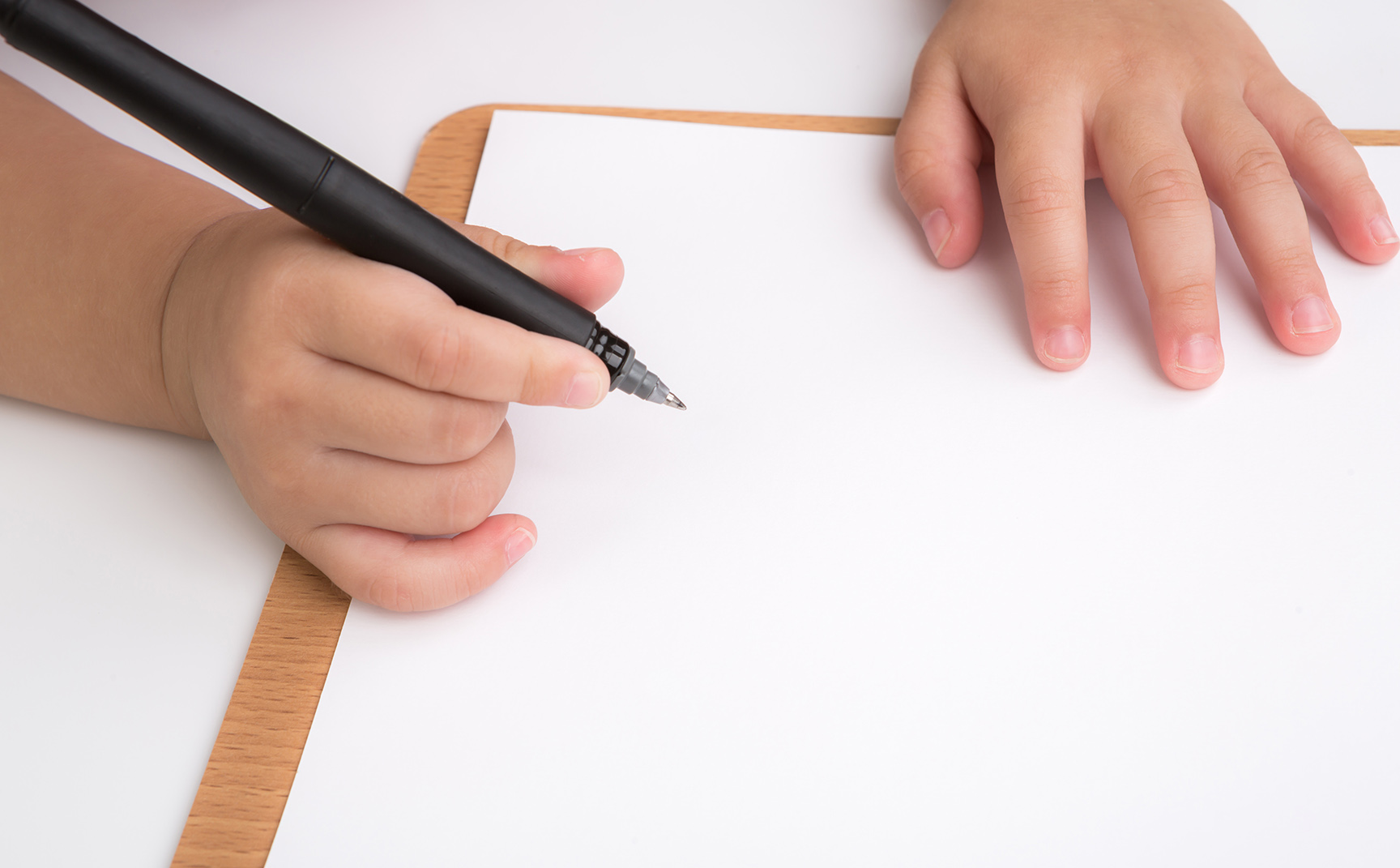
When one thinks about it, children do amaze us. The span of time that they take to learn a language, speak and write is extraordinary. As parents and educators, we all want to encourage our children to master these skills they need in the future. This is especially so for Singapore, where a great emphasis is placed on academic excellence. However, many of us do not particularly think about how these skills develop – or at what age can we encourage our children to start learning these essential skills.

Writing is an essential skill. It is a skill that stays with someone for life. From school to the workplace, writing plays a key part in ensuring that one’s thoughts can be expressed clearly to convene his or her intentions.
Most of us might think that children do not really learn how to write until they are about five or six years old. A 2017 study, that was published in the journal Child Development, yielded some fascinating insights that prove otherwise. It revealed that children actually started learning writing skills from as early as the age of three.
The study discovered that children actually learn the basics of writing before they learn what letters denote specific sounds. This study, instead of examining how children’s writing skills improve as they grew, looked at how early children actually learn how to write.
The researchers found that, from as early as age 3, children begin to write “words” that actually follow rules of the written language. Although these words might not make much sense, they might follow a basic rule of looking like a word! These words are often repeating letters that represent vowels or word types.
Hence, it is important to get our toddlers started on writing. Though their fine motor skills may not be fully developed yet, writing is a critical skill for school-readiness that we can nurture in our children. Best of all, this skill can be trained in ways that are simple to carry out at home. The handwriting practice our young toddlers get as they learn and develop ensures that they would be well on their way to having the fine motor abilities and hand-eye coordination which ensures a smooth transition to Primary One in the near future.

01
SCRIBBLE TIME
Provide many opportunities for your child to trace or draw simple shapes and drawings BEFORE starting on letters. Making the most basic marks requires that a child’s brain, nerve cells and muscles work in sync to produce writing that is clear. This can be done be getting them to copy shapes such as horizontal and vertical lines, crosses and circles.
02
TOSS THE BALL
As mentioned earlier, handy-eye coordination is essential for penmanship. The brain needs to coordinate the hands and eyes simultaneously to write effectively. Your child can develop this skill with various gross motor hand-eye exercises. Examples include playing ball tossing games, bean bag games and bat-and-ball games. Besides, there is the additional benefit of giving your toddler some physical exercise which is always beneficial. Alternatively, you can get some activity books or worksheets with mazes and follow-the-path pictures.
Penmanship requires slow, controlled movements.
03
COLOUR IN THE LINES
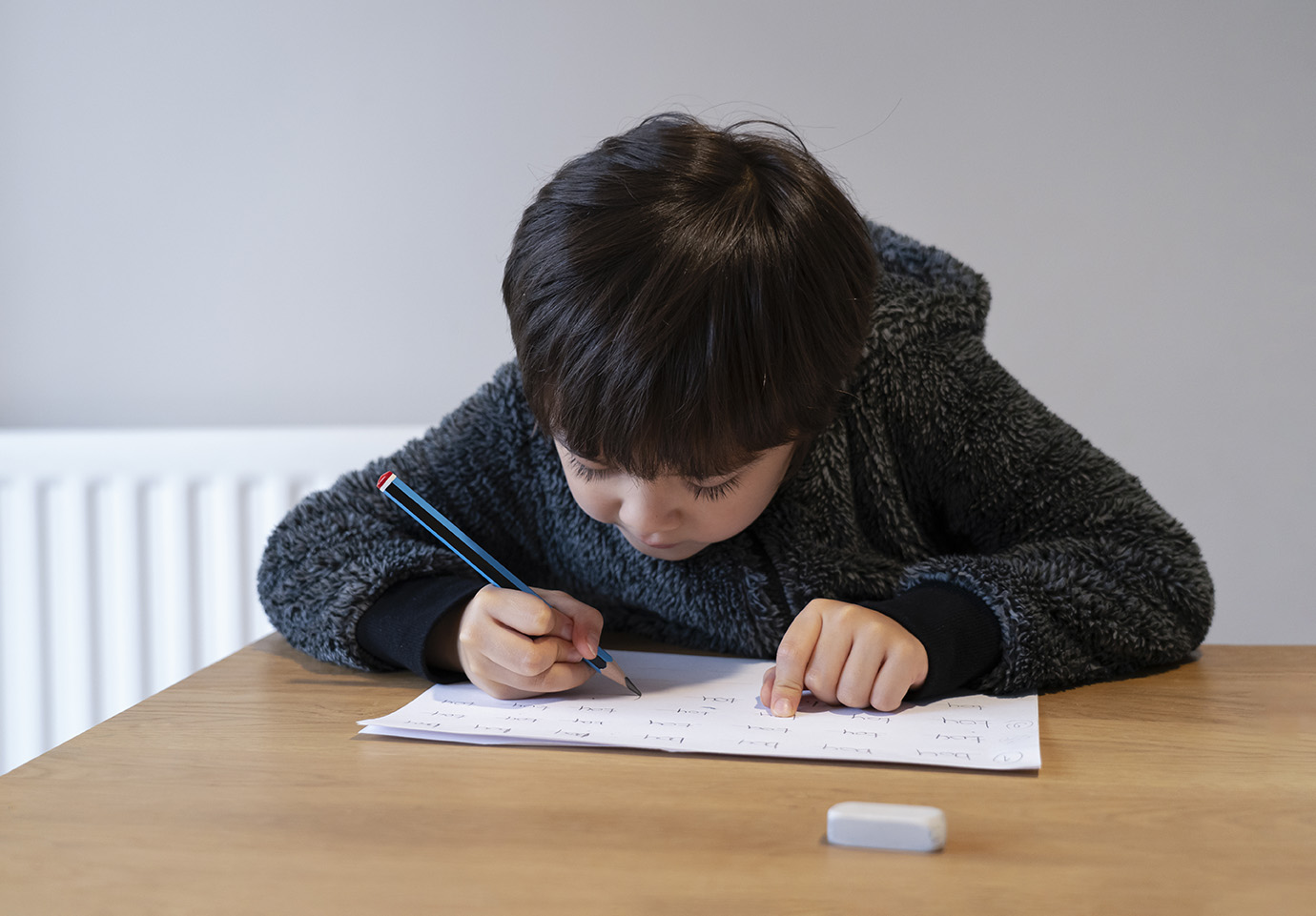
You can set up some special projects to hone this in your child. For example, you can get them to use colour pencils to go over lines or use small circular strokes to colour an image. Doing so ensures that they develop the ability to grip slim objects and move them in a precise manner. If colour pencils are too hard for your toddler to hold, you can provide them with larger crayons, markers, or pens. Although a three-year-old with should typically be able to hold and colour with a regular crayon, marker, or pencil, a younger child may benefit from a larger crayon with a more stable base. The larger design makes it easier for the toddler to hold and start to draw on paper, which gets him or her started on penmanship.
04
FREEDOM
Although it may seem tempting to try and mould your kid into a word wizard (or the next J.K. Rowling) by age 3 to 4, one of the best things you can do is to just take a step back and let them explore what writing means all on their own. Your toddler may try to write words from their own books or imitate you, but rest assured that free play is always what your little one learns best through.

In conclusion, teaching penmanship to your toddler is not just about getting them to write their As, Bs or Cs. It is a culmination of various stages as mentioned in the points above. Ultimately, plenty of evidence states that talking to your toddler, reading to them and playing with them provides a kick-start to developing your little one’s writing skills needed for a rewarding and healthy journey in school. Start some of these activities and see your child start to develop his or her penmanship skills.